Backflow prevention isn’t the most exciting part of owning a home or building, but skipping it can get expensive fast. A backflow assembly is the small mechanical device that keeps dirty water from siphoning backward into the clean water supply. It has moving parts that wear out over time.
We do backflow testing and repair across San Francisco and the East Bay, and we handle the paperwork so your results are filed with the right agency. This is part of our residential plumbing and commercial plumbing services, so we can test a single home device or multiple assemblies at a commercial property.
| Question | Quick answer |
|---|---|
| How often is testing required? | At least once a year, and again after any install, repair, or move |
| Who requires it in San Francisco? | SFPUC, under Health Code Article 12A and CA State Water Resources Control Board CCCPH |
| Who requires it in the East Bay? | EBMUD, under Section 26 of its water service regulations |
| Who can test my device? | A certified backflow tester only, per state and local rules |
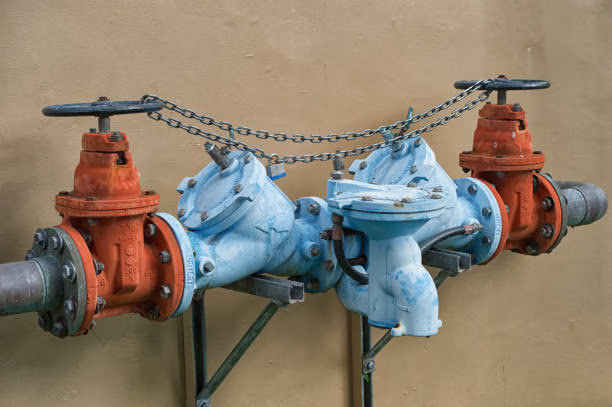
Picture your home’s water pressure suddenly dropping, maybe from a water main break down the street. Without a working backflow preventer, water could get pulled backward out of a boiler, an irrigation system, or a fire sprinkler line and back into the drinking water. The device stops that from happening.
Inside, you’ll find check valves, springs, and a relief valve. All of that wears down with normal use and mineral buildup. A device can look fine from the outside and still fail the moment someone actually tests it under pressure.
SFPUC requires backflow protection for certain cross-connection hazards, including boilers, dedicated irrigation systems, interconnected fire sprinkler systems, buildings four stories or more, and water supplies more than 40 feet above the meter. Approved assemblies must be tested at least once a year. These requirements are part of San Francisco Health Code Article 12A and the California State Water Resources Control Board’s Cross-Connection Control Policy Handbook (CCCPH). SFPUC tracks compliance and sends notices when annual testing is due.
East Bay properties on EBMUD water have a similar requirement under section 26 of EBMUD’s regulations. If EBMUD identifies a cross-connection hazard on your property, you’ll need to install a backflow preventer and get it tested annually at your own expense. Passing results are sent to EBMUD’s Backflow Prevention Group.
If you miss the testing deadline, your water service could be disconnected, which is a much bigger headache than a routine test. If your property also needs gas line repair or installation or sewer lateral compliance, our team can handle those services too.
Here’s what we cover for both residential and commercial customers.
Sometimes a device shows signs of trouble before it fails a test, such as water pooling or dripping around the assembly or hissing from the relief valve. You may also receive a testing notice from SFPUC or EBMUD. In either case, it’s time to schedule service.
At least once a year. Both SFPUC and EBMUD also require a new test when the device is installed, repaired, or moved, even if the annual date hasn’t come up yet.
If the device isn’t tested as required, your water utility can shut off service to the property.
Pricing depends on the type of device and number of assemblies on the property. We’ll give you a clear estimate before we start.
It has to be a certified tester. San Francisco requires testers to hold a valid permit through the Department of Public Health, and the East Bay follows a similar certification standard. Our testers meet those requirements.
Testing checks whether an existing device still works correctly under pressure. Installation is putting in a new assembly, usually because a renovation, a new irrigation line, or a fire sprinkler system created a hazard that wasn’t there before. We handle both.

Don’t wait for a shutoff notice. We’ll test your device, file the paperwork, and let you know if anything needs repair.